To Teach Is To Light A Life Forever

Teaching must be approached with a passion not different from loving. Teachers who display an intense love for teaching do inspire their students and infuse them with enthusiasm to take their learning seriously and joyfully.

According to Aruppe, a teacher has to be in love for nothing is more practical for a teacher than falling in love with his calling in an almost absolute way. When you are in love with your teaching, it seizes your imagination, will affect everything in your life. It will decide what will get you out of bed in the morning, what you will do with your evenings, how you spend your weekends, what you read, what you know that breaks your heart, and what amazes you with joy and gratitude.

We teachers are reminded to fall in love with our calling. If we stay in love, it will decide everything. Yes, teaching is tiring, but when we teach, it will light a life forever.

e hënë, 18 qershor 2007

Exposing the Argument

Exposing the Argument – To expose an argument is to pick out the conclusion and the premise or premises. It is easier to identify the conclusion. It is the claim being made. The premise is the reason to back up the claim.


Sharks are not mammals since no fish is a mammal and sharks are fish.


If the president were really doing his job, the budget deficit would be reduced. But the budget deficit has not been reduced. So the president is not really doing his job.


It must be noted that a conclusion is not a mere summary of the premises. It does not simply restate the premise. The key point is inference – the process by which one proposition is reached and affirmed on the basis of one or more other propositions accepted as the starting point of the process. An argument is neither just a sequence of statements nor simply a narrative of a temporal sequence of events.


It is sunny today. It is also the beginning of the week.


Since the time he graduated from college he has not slowed down in his effort to become financially stable and so he has been working long hours and is now reaping the fruits of his labor.


It is important to distinguish conclusions from unsupported claims. Reasons must be offered for accepting a statement before we can classify it as the conclusion of an argument. Unsupported claims may be true but we will have to look elsewhere for reasons to believe them.

Proposition and Argument

Propositions – Propositions are statements which constitute the basic element in reasoning. Their distinctive character is that they assert that something is the case or that something is not the case. Their assertion may be true or false. Propositions are therefore statements that have a truth-value, that is, they have the property of being true or false.


Logic is the study of the principles of correct reasoning.


Being a president is like riding a tiger.


Charles Dickens wrote Romeo and Juliet.


Propositions differ from question, commands, and examinations. Only propositions can be either affirmed or denied. Questions may be asked, commands given, and exclamations uttered, but none of them can be affirmed or denied, or judged to be either true or false.


Argument – Argument is a group of statements, one of which is claimed to follow from the others.


1.) An argument consists of at least two statements, one that is claimed to follow, called the conclusion, and at least one another, called the premise, that is claimed to support the conclusion.


2.)Every argument involves at least one inference – the inference from the premise to the conclusion.


3.) An argument involves a claim that one statement follows from the others, that is an argument purports to show that something is true.


An argument therefore is not a mere collection of propositions but contains a premise-conclusion structure. The simplest kind of argument consists of just one premise and a conclusion. Here is an example in which each is stated in a separate sentence:


The investigation of supernatural phenomena lies outside the realm of science. Therefore science can neither prove nor disprove the existence of God.


In the above example the premise is stated first and the conclusion second. But the order in which they are stated is not significant from the point of view of logic. An argument in which the conclusion is stated in the first sentence and the premise in the second is shown by the following example.


Moreover, cutting social security will not improve the deficit problem. As the chairman of the National Economic Development Authority has noted, social security is funded by separate payroll taxes and contributes not a cent to the deficit.


In some arguments the premise and the conclusion are stated in the same proposition. Following is an example of a one-sentence argument whose premise precedes its conclusion.


The solar system is much younger than the universe (only 4.5 billion years compared with 10 to 15 billion years), and so it must have formed from older matter that had a previous history.


Sometimes the conclusion precedes the premise in a one-sentence argument, as in the following example.


The budget deficit will not be brought under control because to do so would require our elected leaders in Congress to do the unthinkable – act courageously and responsibly.


As a general rule, when someone gives reasons to support a point of view, that person is usually offering an argument. Likewise when reasons are offered in an effort to persuade us to perform a specified action, we are presented with what is in effect an argument even though the conclusion may be expressed as an imperative or command.


Wisdom is the principal thing; therefore seek the pursuit of wisdom.


Neither a borrower nor a lender be; For loan oft loses itself and a friend.


An argument is good if the conclusion follows from the premises while an argument is bad if the conclusion does not really follow although it is intended to.


Identical twins who inherit the same genes have different intelligence quotient. Environment must play a role in determining intelligence.


A comet appeared and the locusts came. There must be a connection between the appearance of a comet and the coming of the locusts.

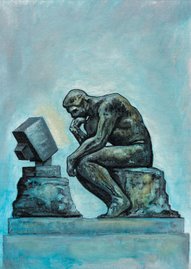
Logic and Inference

Logic – Logic can be defined as the science of correct reasoning. As a science, it employs in an orderly manner certain laws or rules and methods whereby we may derive a valid conclusion from a given set of facts or ideas. Its purpose is to develop a science of reasoning. It clarifies our thinking and helps us to evaluate the reasoning behind the systems of belief and theories that we encounter in life. Logic helps us to understand what our beliefs mean, how to express them clearly, and how they may be supported.


Sometimes the word Logic is used in a loose sense, as in the following statements:


Sociologists understand the logic of events.


The logic of his argument is difficult to criticize.


The logical thing for you to do is go into law.


Socrates is a very logical person.


In our course however, we refer to Logic in a technical sense, namely, as a scientific way of determining the correctness of our thinking.


Logic is about reasoning and reasoning is a kind of thinking. It is a kind of thinking in which we try to solve a problem, make a decision, or determine what is true. It is thinking with a purpose which is to arrive at a conclusion. This process is called inference.


Inference - Inference is the process by which one proposition [conclusion] is reached and affirmed on the basis of one or more other propositions [premises] accepted as the starting point of the process.


Reasoning involves inference. The mind draws a conclusion from a given premise, based on an inferential connection between these statements. Reasoning expresses a logical movement from one statement to another.


The birds are flying south. Winter must be coming.


The lights are out and their car is gone. I suspect they are not home.


Raisins are dried grapes. Prunes are dried plums.


She graduated summa cum laude. She must have studied hard in college.


The cat is standing by her dish meowing. She is probably hungry.


These are some of the symptoms of neurosis: strong guilt feeling, irrational fears, insomnia, and inability to make decisions.